Judgment and Calculation
Three Systems of Colour
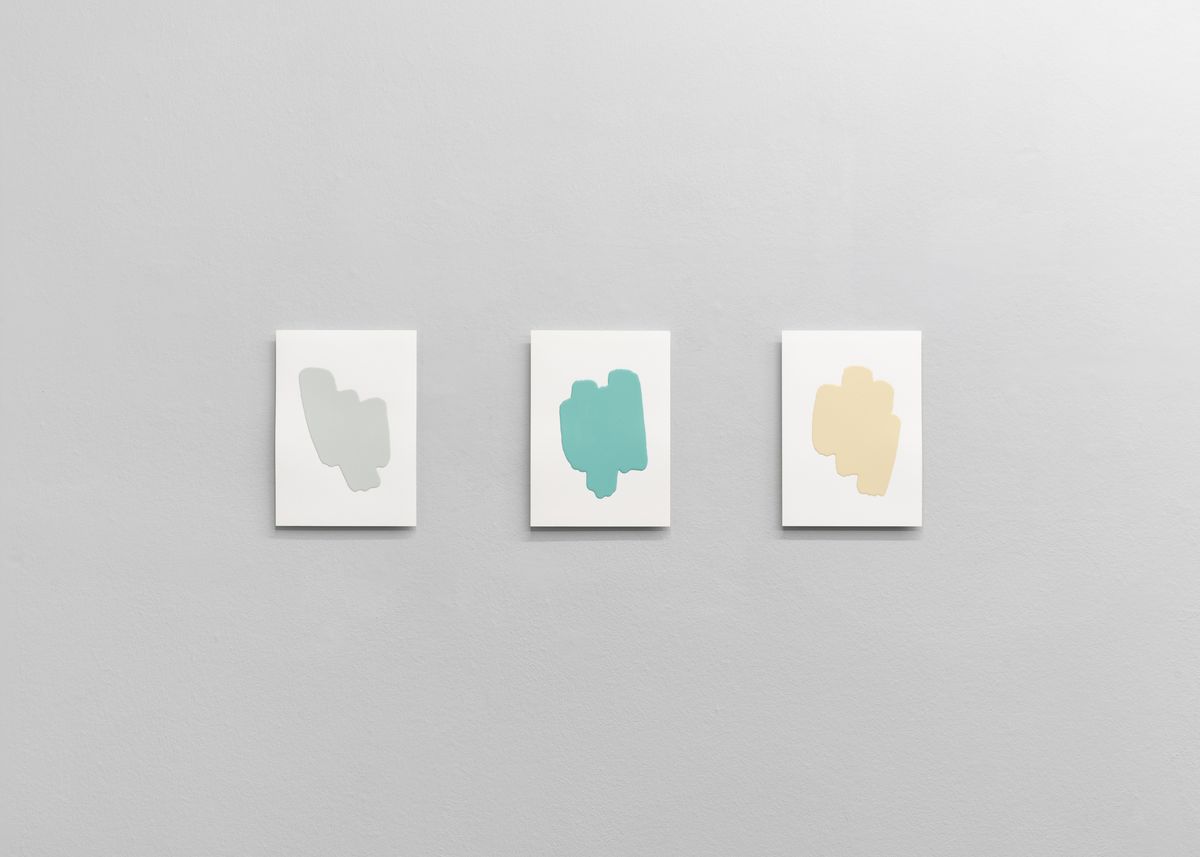

Exhibited Works

They were not just intelligent, but prided themselves on being “rational” … [They] did not judge; they calculated. … an utterly irrational confidence in the calculability of reality [became] the leitmotif of the decision making.1
As early as 1976, the Berlin-born Joseph Weizenbaum (1923–2008) referred, in his book Computer Power and Human Reason: From Judgment to Calculation, to Hannah Arendt's critique of the political decision-makers at the Pentagon during the Vietnam War: they did not judge, they calculated. As a computer scientist and developer of the chatbot ELIZA (1966), Weizenbaum recognised early on the tendency of technological society to understand the world as a calculable system. From data analysis to algorithmic decision-making, from standardised administration to Artificial Intelligence — everywhere, judgment is replaced by calculation, experience by data, and responsibility by programs. For Weizenbaum, the most profound misunderstanding of AI does not lie in an overestimation of machine capabilities, but in equating the question of the essence of the human being with a question of information processing.2
In the group exhibition Judgment and Calculation, the three artists Elisabeth Sonneck, Carsten Becker, and Harm van den Dorpel each develop their own approach to the tension between judgment and calculation — starting from different colour systems: the bodily process of painting, historical colour standards, and the algorithm. If the world increasingly tends to understand itself through calculation, do we still possess the capacity to judge, or is "calculability" gradually becoming the sole measure for our understanding of humanity and the world? How do calculation and judgment relate to one another in the works on view?
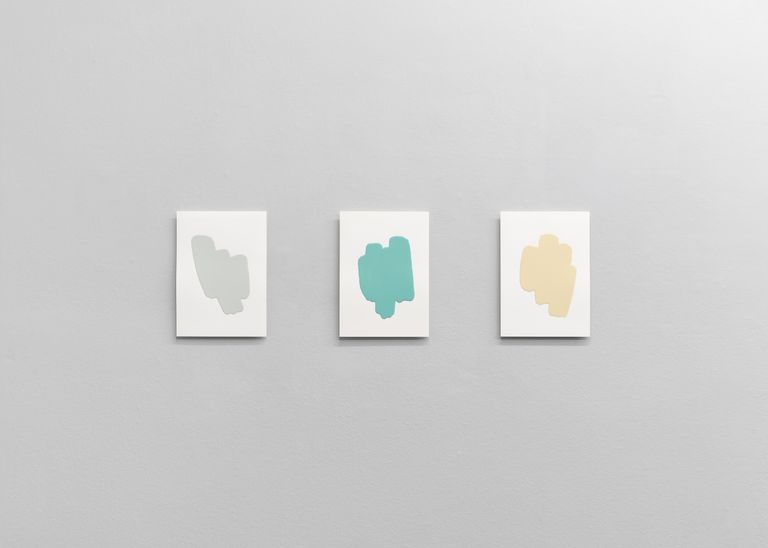
Colour is at the heart of Elisabeth Sonneck's paintings on paper – as a cosmos of infinite differences and relationships. Colour is not a state, but energy which, in interaction with other colours, continually gives rise to new connections in space and time. Without a pre-determined pictorial scheme, the repetitive application of semi-transparent paints leads to chromatic processes characterised by subtle colour shifts and irreversible traces of layerings. From this starting point, Sonneck has been developing site-specific paper installations since 2006 – her so-called Scrollpaintings – based on the material tension inherent in the production process: the papers are transformed into constantly changeable, temporary and non-fixed spatial structures, thereby transforming the relativity of colour into the relativity of form. In Sonneck's painting, "judgment" can be understood as the empirical, momentary and processual act of decision-making that arises from bodily movement and reach, and perception. In her installation practice, "judgment" is largely transferred to the material, its properties and the space itself – the papers, combined with found objects, enter into delicate physical equilibria. In her painting, too, "calculability" does not appear as a means of control, but as a conscious reduction of tools, which opens up the diversity and unpredictability of colour. In her installations, this is reflected in a process-oriented approach to working with materials and space that remains open-ended and is in a constant state of flux.
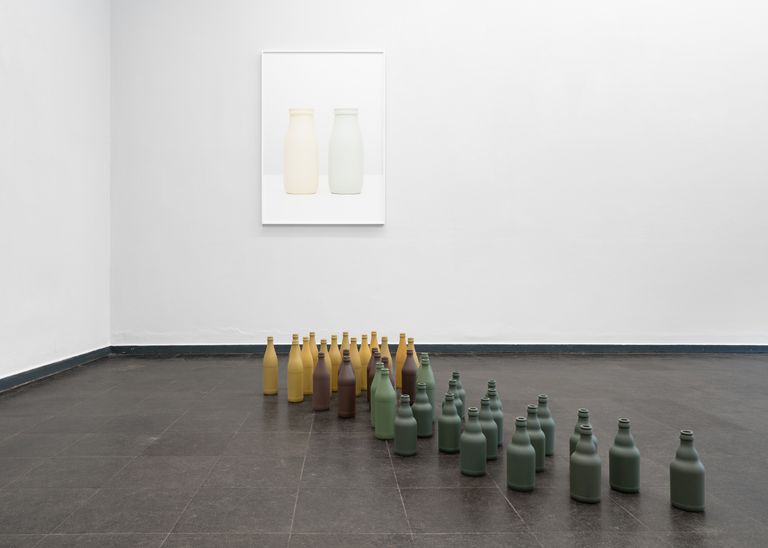
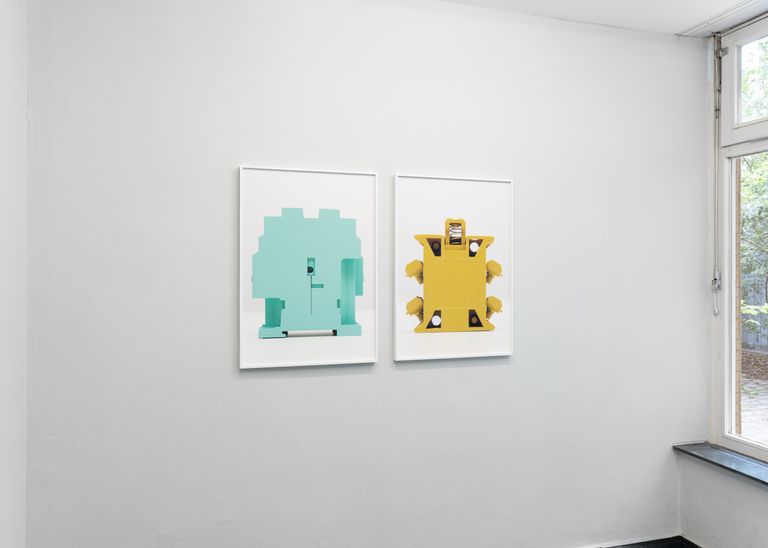
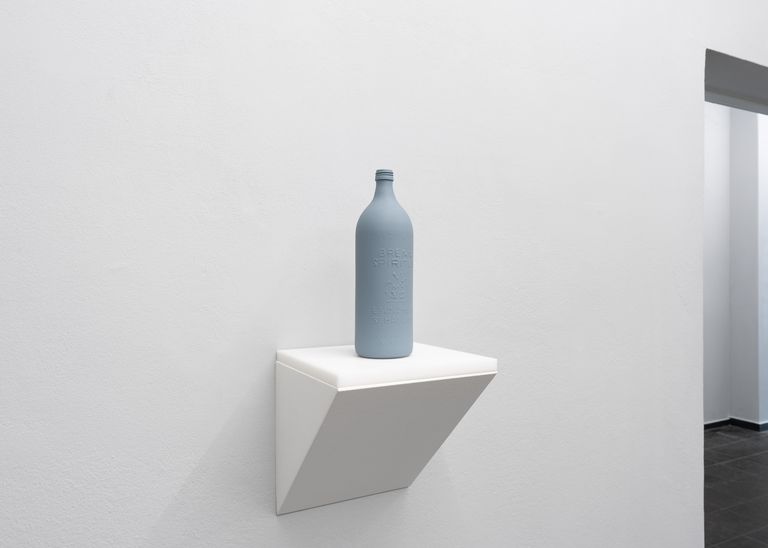
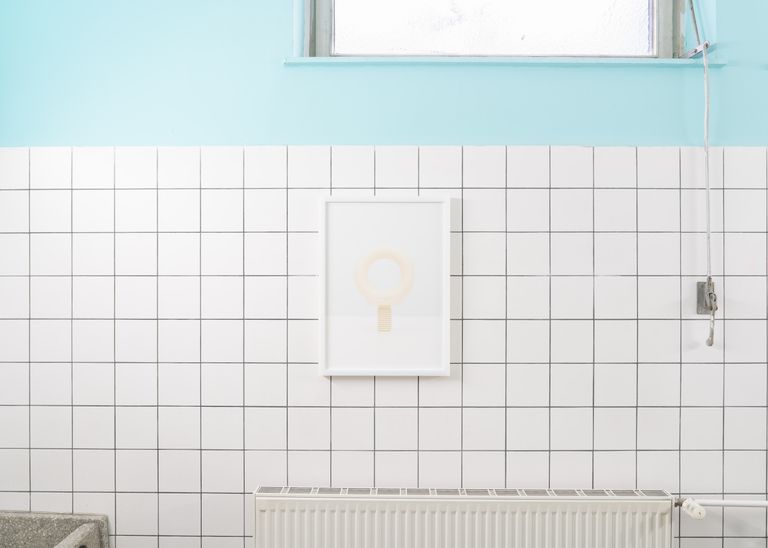
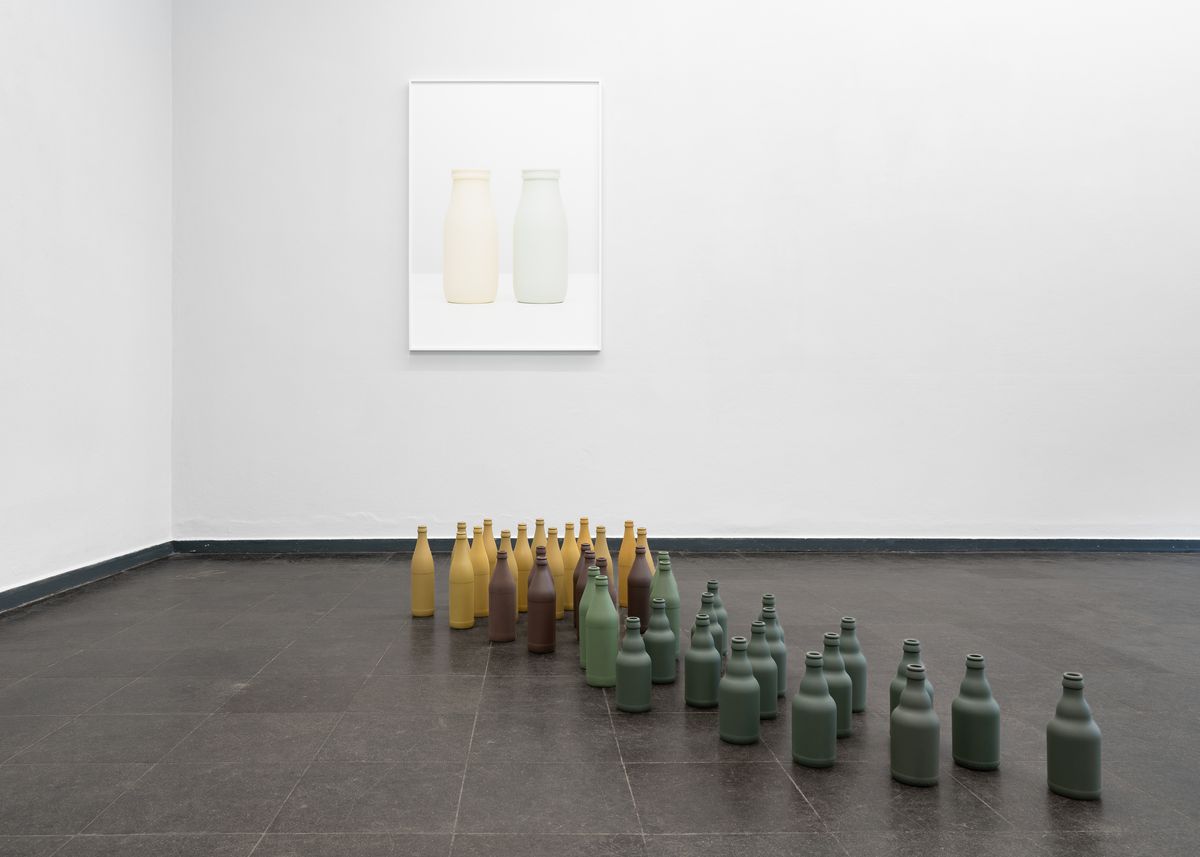
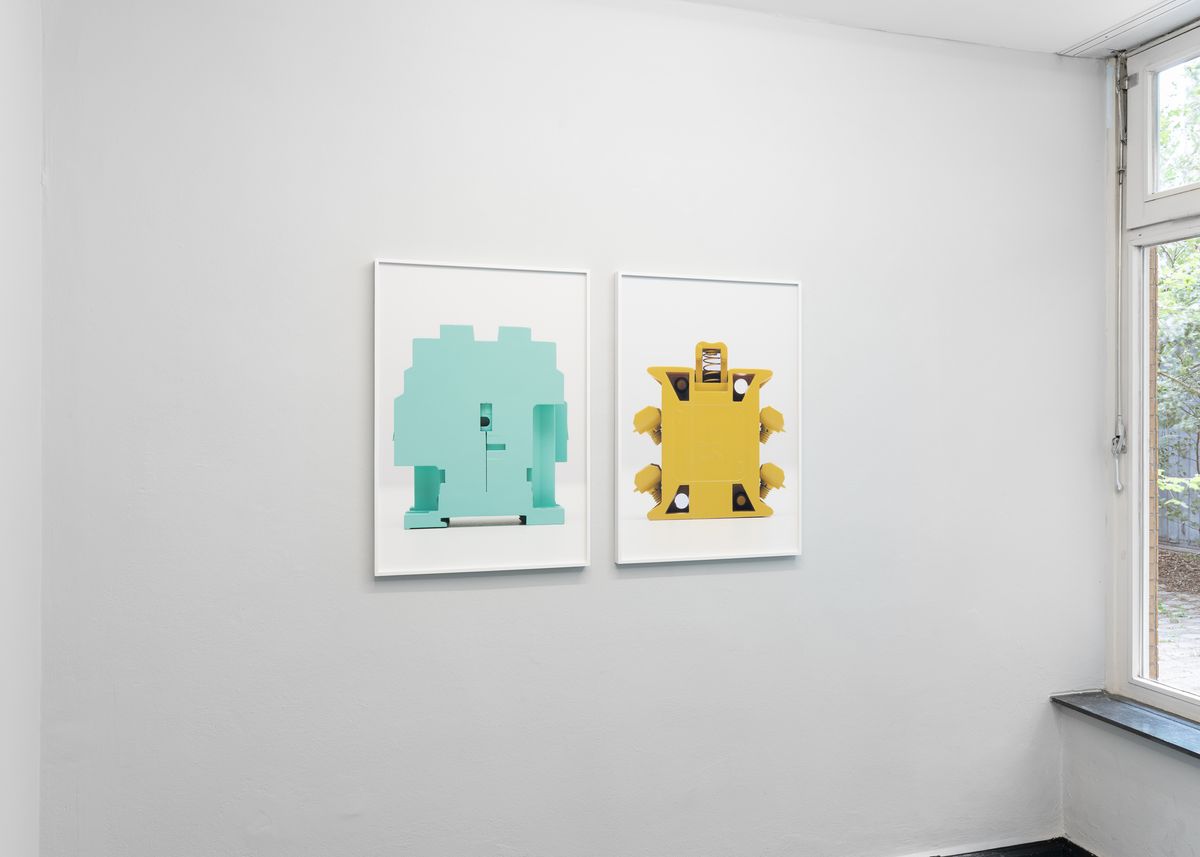
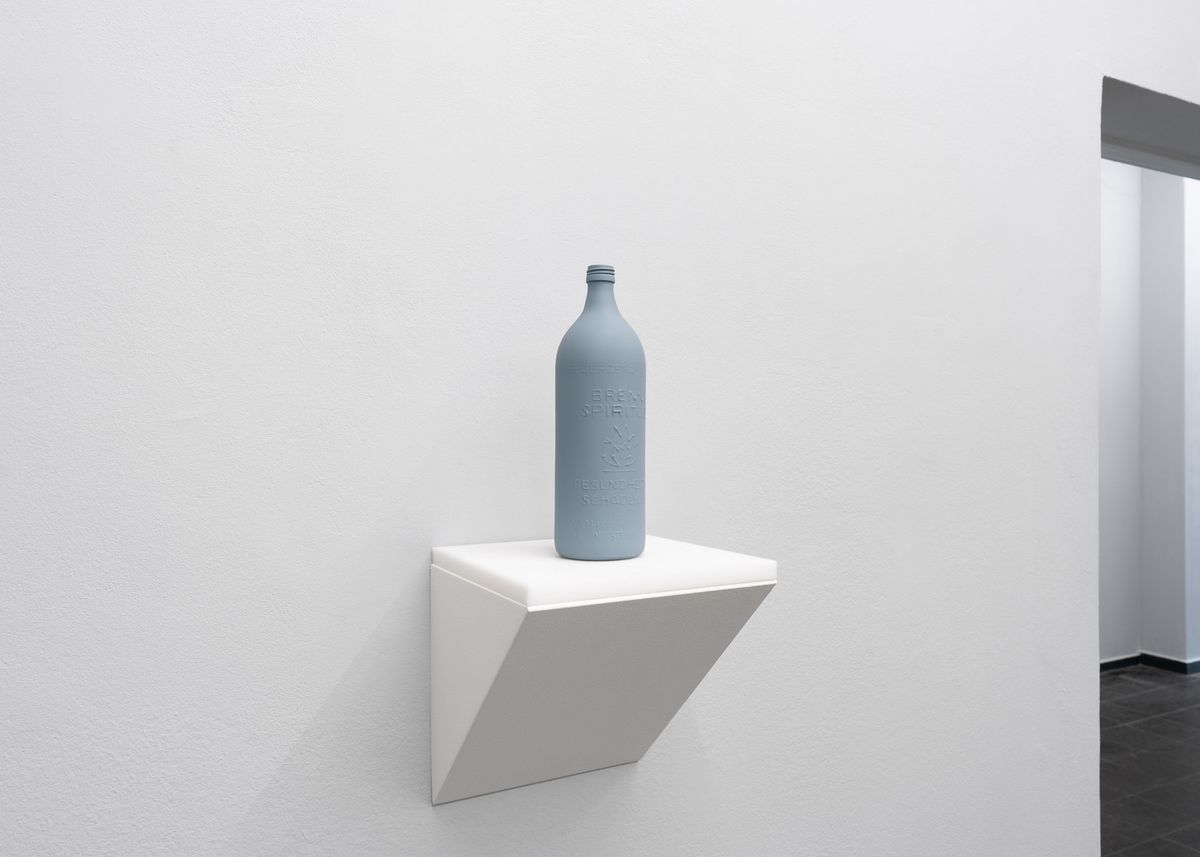
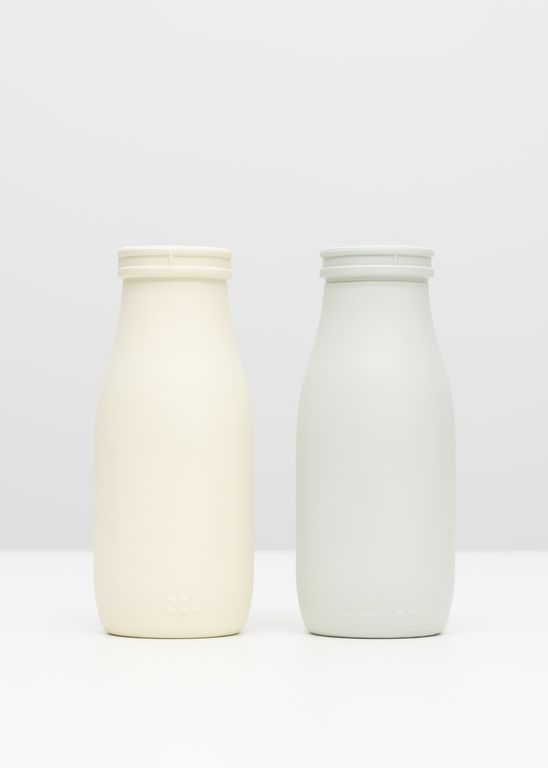
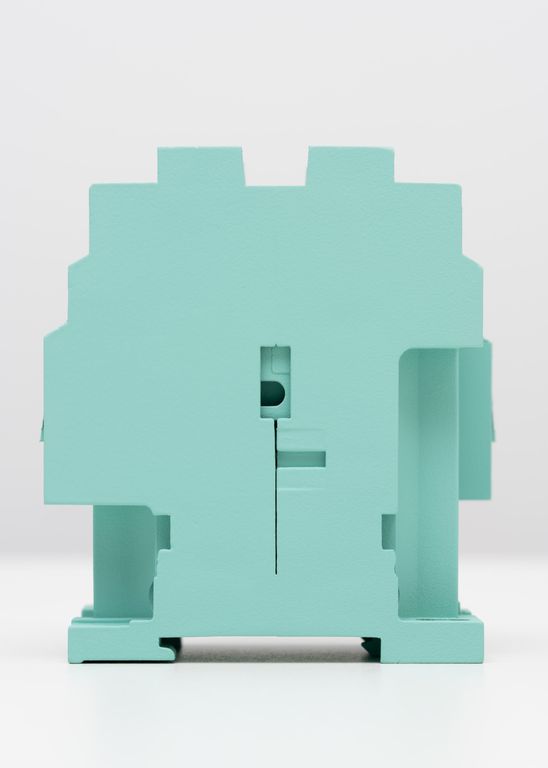
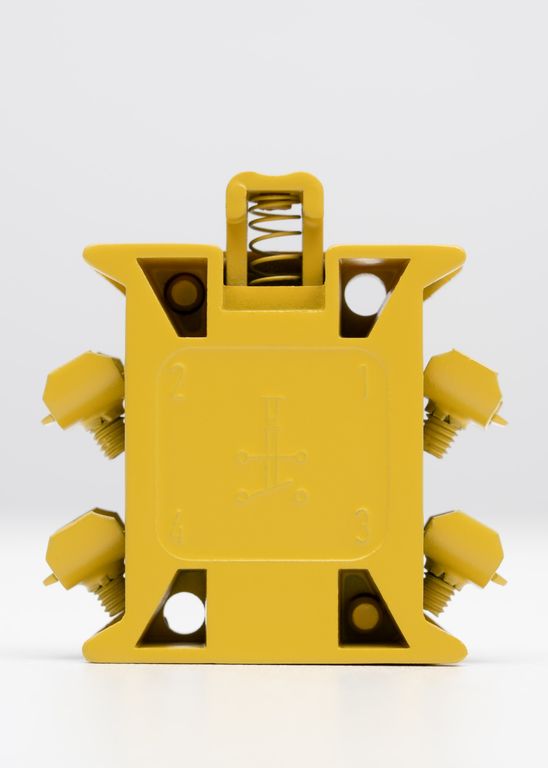
In his engagement with the historical standardisation of colour and objects, Carsten Becker shows how "calculability" emerges as the effect of normative orders. In the DIN series, developed since 2019, and the most recent TGL series, Becker reconstructs industrial colour systems such as RAL and the now vanished TGL colour standards of the GDR. Colour is no longer understood as a field of perceptual experience, but transferred into a system of repeatable, comparable, and technically processable parameters. The objects that appear in his works — standardised parts such as bottles and components of GDR electrical engineering — were originally embedded in functional production systems and defined by unambiguous numbering and norms. This standardisation is at the same time the structural precondition for a logic of resource management based on calculation — especially in the military-industrial systems of the World Wars and the Cold War. Through re-lacquering, reproduction, photographic composition, and juxtaposition, Becker removes these objects from their original functional context and exposes their historical layering as well as their entanglement with institutional structures of power. This process is not a reconstruction of standards, but a renewed opening of the visible to judgment: to contemplation, interpretation, and reevaluation. Colour becomes the bearer of ideological shifts, the industrial product the material imprint of power structures, and the norm appears as a trace of hidden continuities of differing political orders.
Harm van den Dorpel's practice is based on algorithmic systems. Visual objects emerge through procedures such as random number generation, genetic algorithms, or blockchain-based programs. They continuously reproduce themselves and mutate. Colours are understood as "colour chords" — predefined colour combinations within colour spaces such as RGB, HSLA, or CMYK, from which the further processes of the system unfold. For van den Dorpel, the individual colour is meaningless; meaning arises above all in the relations between colours. This experience takes place primarily on a bodily, non-linguistic level, similar to what Proust described as "mémoire involontaire", in which sensory impressions trigger memories prior to any linguistic articulation. The resulting images, however, are not only the product of algorithmic search but also the result of aesthetic decisions. Since Death Imitates Language (2016), van den Dorpel has been investigating the question of what, within a system of infinite variations, determines which images are preserved and which discarded. In this, the artist acts as the selector. In Hybrid Vigor .bio, an extension of the Algues Artificielles series, this decision is transferred to the audience. This reveals a central connection: algorithms generate possibilities, but meaning arises only through human judgment. Calculation can produce countless images, yet cannot explain why visual objects with identical colour combinations touch different realms of memory and evoke associations of childhood, love, grief, or death.
Qin Yan
Footnotes
Announcement

- Duration
- July 11–August 22, 2026
- frontviews at HAUNT
- Kluckstraße 23 a, 10785 Berlin
- Artists
- Carsten Becker, Harm van den Dorpel, Elisabeth Sonneck
- Curated by
- Carsten Becker
- Text by
- Qin Yan
- External link
- Exhibition page